To manage the time I have to complete this project with comfort, I have to make a timeline for my upcoming goals in order to stay organized. Especially because I tend to be someone who struggles to manage their time.
What's next?
1. Week 1 - 1/16/26 - 1/23/26
Research different genres.
Start thinking about plots.
2. Week 2 - 1/26/26 - 2/1/26
Decide which genre.
Research the genre; viewing different examples.
Learn how to gain permission to use music.
Have more or less an idea of the plot.
3. Week 3 - 2/2/26 - 2/8/26
Have story boards and script.
Finalize characters. - Including actors and crew/equiptment.
Finalize filming location and time.
Have props and costumes finalized.
4. Week 4 - 2/9/26 - 2/15/26
Start filming. (The filming process will probably take 2-3 days, starting on a Friday and ending on a Sunday.)
Record VO and foley if necessary.
Sort different music options if the first plan doesn't work out.
5. Week 5 - 2/16/26 - 2/22/26
Dedicate almost full week to choosing cuts and editing.
Revising different versions.
6. Week 6 - 2/23/26 - 3/1/26
Finalize editing and final product.
Work on CCR (Creative Critical Reflection)
Edit and review CCR.
7. Weeks 7-8 - 3/2/26 - 3/17/26
Finalizing final details about project.
Makes room for any buffers or delay in process.
What will I do with this?
I will try my best to stick to this schedule to work out my project comfortably but thoroughly. I have left plenty of "extra" time just in case plans don't come out as a wish and have enough time to make it up.
For my upcoming film opening, I want the credits that appear to enough to correctly credit whoever took part in the process and product; such as the production company, main actors, editors, director, producer, writers, cinematographer. But not TOO flashy to the point that it's the main part of the opening and/or takes attention from the introduction to the story. I'm aiming for the beginning to be an important part of taking the story off.
To achieve this and get a good idea of fundamental guidelines to including the credits, I need to view a few various credit sequences of the genre I chose, sci-fi dystopian, like I did for the openings in my last blog!
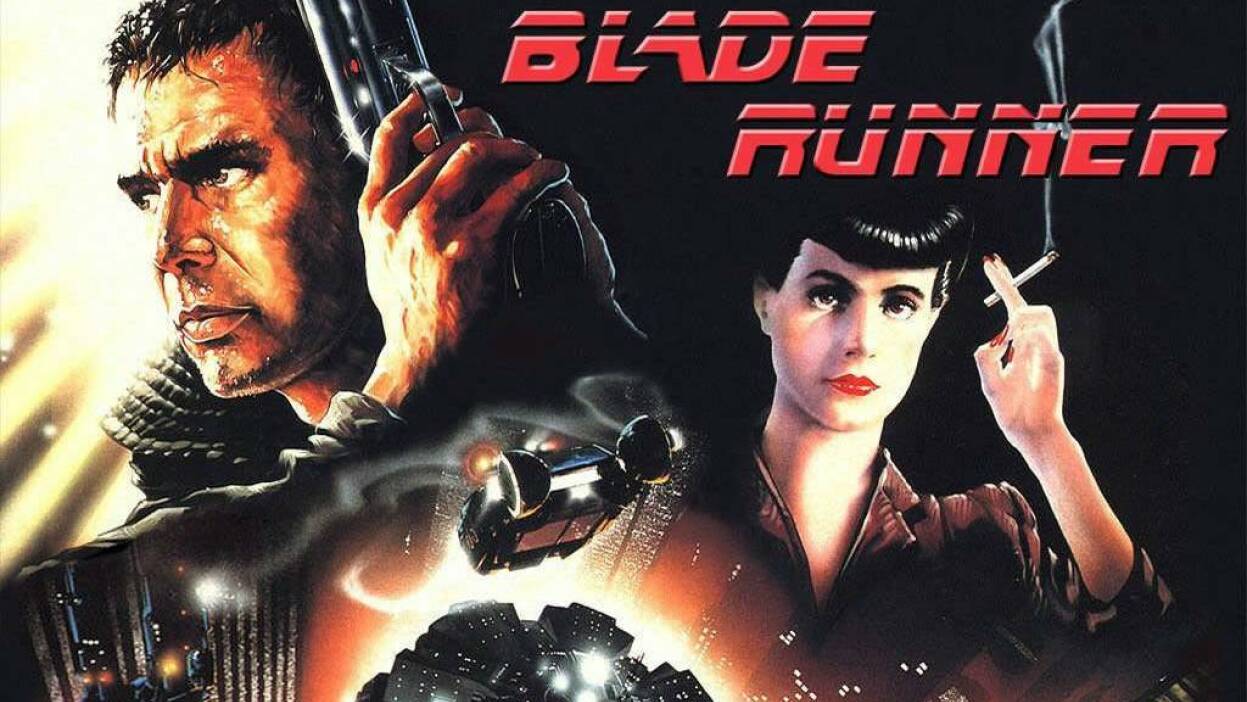
The credit sequence of this intro takes up a good part of the whole. After showing the film production company, the rest of the credits just roll before the opening sequence really begins. While this isn't a bad approach, it's just not what I'm picturing. Though, this does include background information in regard to the movie because of the text during the middle of it and the peek/imagery we see towards the end. For example, we see the grand city in which the movie is taking place.
The opening of The Terminator completely revolves around its credit sequence, having neat editing that hints to the style of the movie, and then the title. This is clean and fits the movie well. But again, this is not the goal of my opening nor my credits. It also does not have any background information, just editing and music that set the tone of the movie.
12 Monkeys also does not begin the story during the credit sequence, but like Blade Runner, it contains text and quotes to provide background information for the audience. For example, we know we're going to see things in perspective of someone who's mentally ill because it is explicitly said to us. We're then shown a spiral of monkeys and as the title moves closer, we're shown the names of the main actors.
I want the credits of my movie opening to differ from this because I want the credits to appear on the screen while the story is starting to develop. Though, I did get a good look on how to structure the credits and present them correctly.
To better understand the project I'm getting myself into, I looked into examples of various sci-fi dystopian film openings and picked 3 to research and analyze. One being the first Maze Runner and Hunger Games movies and Interstellar. With this, I hope to view different ways/strategies I can form my own creative start to a film.
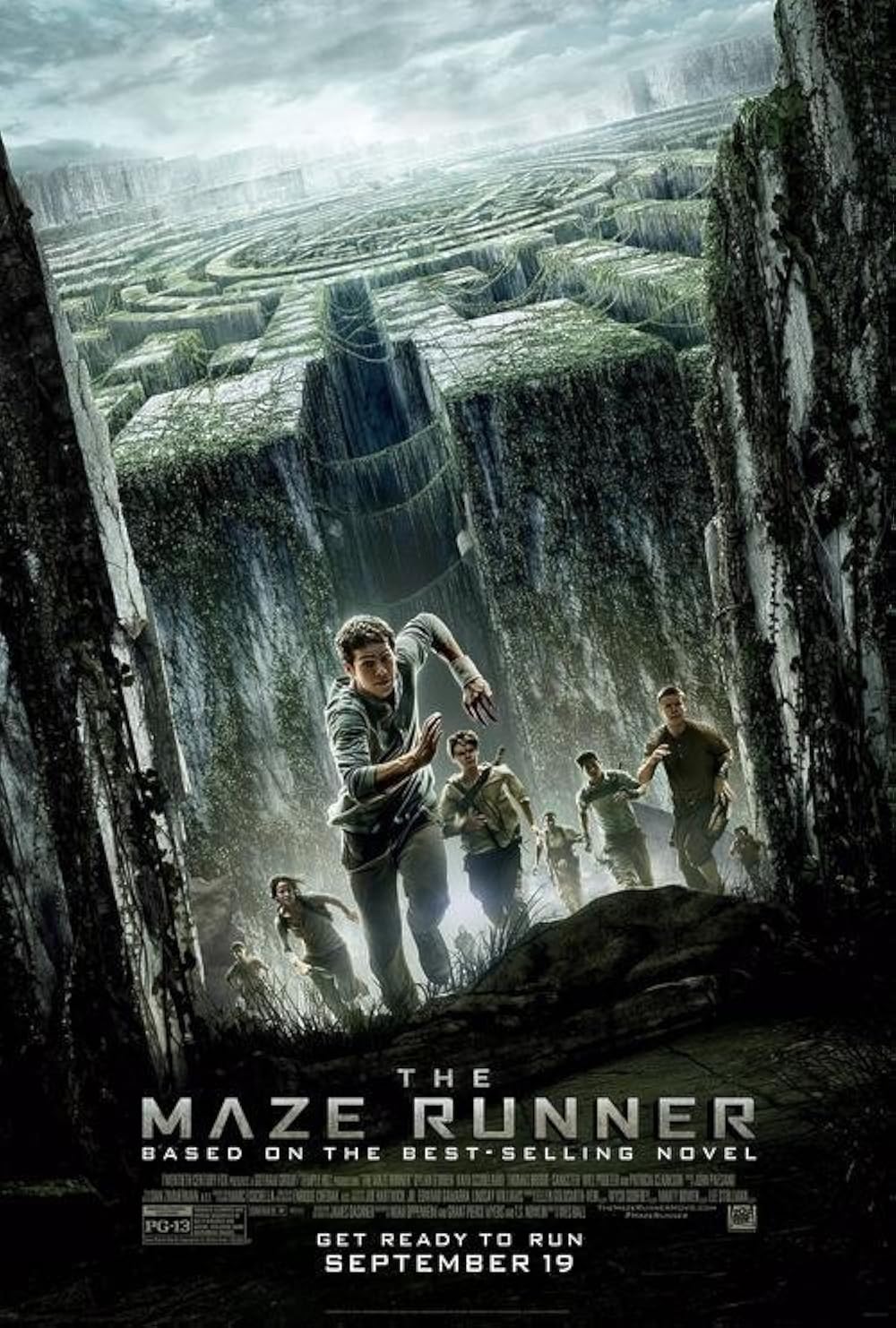
Maze Runner:
This opening scene shows what seems to be the main character of the Maze Runner in an underground elevator thats taking him up. He's in distress, coughing, stumbling, and looking around, almost like he's confused by what's happening. All of a sudden, some type of beast bangs against the cage-like elevator, and he bangs against the top (maybe to the surface), screaming for help. When the lift reaches him to the top, he faces a group of boys his age (teenagers to young men) looking down at him. Which, they seem to know what's happening to him and to have been through it before. He then starts running away from them, obviously threatened, and thats when he faces the giant maze.
Though this might not be the approach I'll be going for at all, I like the way that we know that he isn't the only one going through whatever is happening, or has gone through it. That it seems that he is the main character, but also one amongst many and not the main idea of the entire movie. Also, the elephant in the room would be the maze and the creature that was underground. I have never seen this movie before, and it already makes me want to put pieces together in my head. Do the monsters also roam in the maze? Are they the major threat or just a motive for these boys to keep going instead of revolting? But what we do know is that our protagonist isn't a mighty hero, at least not at first, and that he is part of a practice many others like him fall victim to.
Hunger Games:
The start of this first scene sets it off with some background information from the Hunger Games book, explaining what set the games in motion and the baseline of how they work. From this we also learn that there are districts in this world as well as the capitol, which makes me assume is where the people in power reside. Then we view two characters in glamorous attire and hairdos on a stage. The man on the right with the black and red suit, who we learn to be the head game-maker, is talking about the importance of the games and how he thinks they bring their world together. Obviously, this is a clouded overview of what we already know to be a violent, inhumane affair. Then, whilst he's being asked what his "personal signature" is it cuts to a girl screaming in one of the districts. Here is where we meet the main character as she comforts her sister who's afraid of being reaped. She then leaves the house.
This is a great opening because besides the background knowledge we receive, we learn a lot of background knowledge by casual conversation and slight representation through costume, setting, and the cut from one scene to another. By seeing the two people at the start in contrast to Katniss and her sister Prim, we know who is the privileged party. While one side wears fashionable, loud, and bright colored clothing, another wears simple rags that lack any color at all. This represents the rift in between the districts and the capitol, but also the difference in life styles. The people in the capitol truly believe the hunger games are a good thing, while the districts live in reality. Not to mention the clear difference in the settings, a lit up stage to a broken down town with small houses. Furthermore, through dialogue we are told various different things. For example, the man with the blue hair tells us there was a rebellion, and that the games helped fight against it, pacified it. And at the end where Katniss tells the grumpy cat that she'll cook it if it comes to it, lets us know the poverty they live in right off the bat.
Interstellar:
Interstellar has a different approach to its opening. While in the hunger games we are a spectator of an interview happening within the story, the interviews we view in Interstellar look like they're from documentaries. Documentaries of aged people who were kids when the world's tragedy was happening, talking about their families, the worldly issues, and the precautions they had to take to protect themselves against it. One of the ladies who mentioned that "the blight" took over her family's farm, and they had to burn it. She goes on to explain how they still kept their corn but had to face dust storms to which families had to wear masks and be cautious of where they eat and drink from. Somewhere in the opening we see a man, who appears to be the father of one of the women in the documentary, having a nightmare about a plane crash.
While in the prior movies we're shown that a government or people in power are responsible for the troubles in their world, in this opening we only see bizarre dust storms and "the blight," some type of rot that destroys agriculture. We don't know if any of these were caused by a regime. What we do know is that the man who seems to be our main character is traumatized by a crash which haunts his dreams, that the people in the past had to face bizarre weather and agricultural ruin, and that somehow society/humanity manages to get past it.
Overviewing different film openings of the genre I'm choosing to represent successfully helped me in getting further ideas on how to cultivate details to help the audience understand certain things about the plot I'm trying to build in a dystopian world.
After some more thought and overview of different genres, a genre that really caught my attention was Sci-Fi, dystopian or post-dystopian type of storyline.
As I enjoy light-hearted films, I also enjoy indulging in worlds that tell human stories through fictional representations. Dystopian films/stories have been around for quite a while now. But strangely, they've been getting more attention by later generations. Why? Maybe it's because some contents of the stories reflect current events, or maybe it's because when movies like the Hunger Games... or even when the Harry Potter movies came out, few were thinking of how Reaping Day is on July Fourth or how Voldemort and the Death Eaters were a group made for discriminating against a certain type of wizard.
Either way, these types of films are progressively getting more recognition by younger audiences like teenagers and young adults.
In addition to that, a lot of dystopian films are adaptations of books, so this also adds an audience that are fans of the original novels.
Some dystopian films follow a protagonist who questions or challenges the all-powerful, totalitarian government/oppressors they live under. In a lot of these pieces, the creator's point is to make a somewhat exaggerated reflection of the world we currently live in. Or even a representation of what a world could come to if it were to stay a certain way.The genre openly critiques certain human practices in a fictional way.
Other conventions may be dim lighting due to the literal or representational darkness of the world they live in, rundown areas where the oppressed may live, contrasted with vast technology, luxury, and vanity that the oppressors or bystanders have. For example, in the first Hunger Games movies, Katniss lives in District 12, the poorest district, but when chosen to fight in the games and be moved to Panem (the capital), her and Peeta find the lavish lifestyle full of feasts, technology, style, that the citizens of the capital live with at the expense of everyone else.
Another example of the contrast is wardrobe. A character's rank, class, or role in a society in dystopian films are often easily classified by what they wear. We see district 12 wearing whatever they can manage to keep together or scrap up, while Panem citizens wear lavish dresses, wigs, and makeup.
Two films I'd like to set as an example would be 1984 and The Maze Runner:
My first idea for a genre to make a film opening of was a Rom-Com!
I've always loved and enjoyed romcom movies, so it was an easy first thought. The typical target audience for a movie like that would be teenagers to young adults, but are usually for everyone, having topics or humor that could be for older audiences. It really depends on which. For example, there are movies like 10 Things I hate about you and Clueless that have things teenagers would relate to. On the other hand, there are movies like Me Before You and Love Actually that have topics that take emotional maturity or experience to understand better.
Romcoms usually have two lovable leads that meet in some sort of special, bizarre way, a "meet-cute." As well as cliche elements like a comedic best friend, memorable confessions or lines, grand gestures, the building of tension, and an inevitable obstacle that the two people face that could either bring them together, or sadly tear them apart. They often fulfill a Meet-Lose-Get Back structure and a "Will They Won't They" kind of tension.
As for setting, there's no ONE place where these kinds of stories take place, it really depends on the story. If it's a plot between teenagers, the story might take place in a highschool in a small town. Or when the story surrounds adults, they might be in a city like NYC (How to Lose a Guy in 10 Days) or somewhere random like a Hawaiian island (50 First Dates).
Something that seems obvious but may not be is that it's vital that romcoms maintain a good balance between comedy and romance. Because we need moments that make us laugh, but also that make us swoon. And vice-versa, we want to "aw" at our televisions, but we also need a good laugh now and then to keep us interested and awake.
Lastly, lighting in romcoms is usually bright and colorful, which matches with upbeat catchy songs all throughout to keep a happy mood. Though, this isn't the case for all romcoms.
Romcoms usually follow a similar script and are marketed to be that way because it works very well. It may be predictable but that's why a lot of people like it. Some just want to watch a movie to feel good, and this is what this genre does. By incorporating familiar tropes and types of characters, romcoms lure their audience into watching something they know they'll like.
Two movies that instantly come to mind when I think of this genre are When Harry Met Sally and 27 Dresses. These movies, as discussed before, DO follow the same type of sequence in a way, but honestly that's why I like them. They're classic and rewatchable whenever I feel like I need a pick-me-up.