Wednesday, February 18, 2026

The One With the Railroad Museum


Where I'm filming


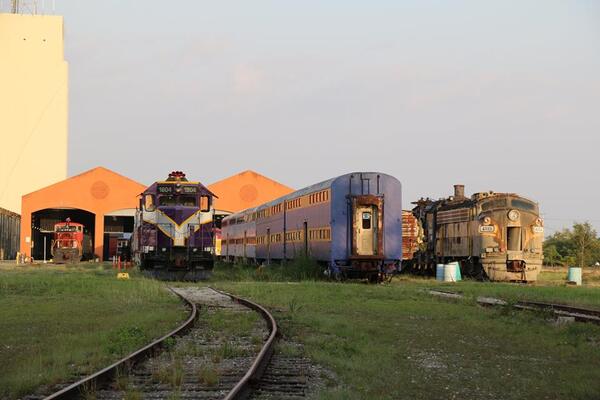
    As described in one of my previous posts, on February 15, I explained how I'm going to be filming at a museum that has what I need for my first scene. AKA, the railroads and old trains. This museum is the Gold Coast Railroad Museum.  

    I can't exactly just waltz in there with a number of suitcases and bags in hand and be like "Let me film in here!" At least I don't think I should. Thankfully, they have a complete website where they provide their phone number and email. Usually, I'd send an email first, but in this case I will be calling and asking for permission directly instead. 

    Since this museum provides services such as events and photoshoots, I'm thinking it won't be too big of a deal to ask for permission for something like that. And after a small conversation with my Media Studies teacher, I know I have to explain that this project is for school and is non-profit, along with the little details they'd have to know for this to go smoothly. 

    I'm planning to film at least the railroad scene this weekend on Saturday, on which they're open from 10:00AM-4:00PM, which I think gives me plenty of the time I need to get this scene done. 

    I don't see many obstacles besides the entrance fee. And as for that, I already had a conversation with my mom (the main adult helping me with SOME parts of the project), and we both agreed that considering how great the location is, it'd be no issue. 

    I will update this segment of my blog when I've called the Gold Coast Museum and have more information!

--------------------------------------------------------------------------------------------------------------------------------

Sunday, February 15, 2026

The One With Setting and Props


Sets & Props

    In this blog post, I want to organize my ideas for the setting and props for the two different scenes in my  movie opening! I'm pretty sure I have mostly everything figured out, but I hope that this can also help me think of anything I might've forgotten. 

--------------------------------------------------------------------------------------------------------------------------------

    Settings and Props Scene 1:

    For the first scene, we will be filming at the Gold Coast Railroad Museum in Miami. This location is great because it gives us the setting we want for the beginning scene without the difficulties of working around an operating train track. . . and they do photoshoots so we think that it'd be possible to film there. 

The Gold Coast Railroad Museum Reviews | Tripexpert

    The track will be surrounded by open suitcases and bags with a few left-behind pieces of clothing and other belongings. I also want to throw some trash around to make the area look more neglected. Along with that, the main character will carry a gas-mask, backpack/bag, and some kind of means to defend herself like an old baseball bat or pocket knife. And lastly, the gold chain and can of food she'll be finding in one of the suitcases. 

    Setting and Props Scene 2:

    The setting for the second scene, AKA the flashback, will simply be filmed in my dining room. It's perfect because it has the big window in the background that will show the scene in between the officer and civilian so, yay! 

    But what'll really make these scene is the additional props that show the audience the living conditions the main character's family lives in. The table is either going to be stacked up boxes or a small table covered in a bed sheet. I want to have plates and utensils that don't match each other, a long with a lack of a real meal on the table. The curtain the dad will close won't be a real curtain but an old blanket or sheet as well. Lastly, since the family is notably missing a member, I might have some old family photos propped up on a shelf in the back. 

--------------------------------------------------------------------------------------------------------------------------------

Friday, February 13, 2026

The One Where She Plans the Costumes


Costume Planning

    As for costumes, I have each character's wardrobe planned out. To help me figure it all out, I viewed different examples from many movies of the same genre to inspire me. I think this part is one of the most important because it's one of the details that sells the authenticity of the story. It wouldn't make sense if a person who lives in a post-apocalyptic world would wear brand new sneakers and a fresh outfit. 

--------------------------------------------------------------------------------------------------------------------------------

Inspiration:

  •     A Quiet Place: Day One (2024):
    In this movie, the characters aren't wearing clothes especially for the disaster that happened, because they clearly weren't expecting it. What I mean to point out by saying that is the characters are seen wearing regular everyday clothes, subtly signaling to the audience that the invasion was out of the blue. Something like that would contrast the wardrobe characters have in The Hunger Games because the people in district 12 dress according to their economic situation, in preparation for the reaping, or in Katniss' case, in preparation to hunt. 

    A detail I really like about the costume is Samira's yellow cardigan, which continues to have emotional significance towards the end of the movie. 

Imagen de Story Pin 

  •     The Last of Us (Series and Game): 
    Like the previous example, the main characters in The Last of Us wear regular clothes that they've either had since the start of the incident, or clothes they've found along the way while they traveled. One difference is that they carry a bag with supplies like weapons, food, and other necessities because they move from place to place regularly as their journey goes on. One thing they both have in common is how worn-out and dirty the clothes are. These signs of distress reflect the leading issues in both pieces. 

 Imagen de Story Pin

--------------------------------------------------------------------------------------------------------------------------------

My Costumes

    Beatrice (Present):

    To reflect the destroyed future that she is being shown in, she will be wearing worn, dirty, and torn up clothing along with a bag that is just as disheveled. She might even wear an old utility belt, knee pads, some bandages, and so on.  To achieve this, I'm planning to thrift some clothes and distress them until I get the look I want. As for the accessories, I already found the bag I want to use. 

Visual Example: The Last of Us

    August (The father, in the flashback):

        He works at a blue-collar job, possibly a mine or a factory, so he will be wearing an old, dark uniform. 

Visual Example: The Ballad of Songbirds and Snakes
Imagen de Story Pin

    Officer (Flashback):

    I don't have anything special in mind for the officer, just that instead of him being dressed like a regular cop with a blue uniform, I want him to have a more military-like looking outfit with badges and a hat. 

Visual Example: Random
 

    Beatrice, Maxxine, and Civilian (Flashback):

    These three characters share screentime but also similar economic situations. So, they'll be wearing simple clothes, possibly hand-me-downs or over-worn clothing. 

Visual Example: The Hunger Games & The Ballad of Songbirds & Snakes
  Imagen de Story Pin


Thursday, February 12, 2026

The One With the Character Development


Character Development

    Though this movie opening doesn't necessarily focus on the characters presented to us, rather more their surroundings, it's still important to subtly build their personalities and how the world around them has affected them as people. 

    There are 5 characters in total. Beatrice (the main), Maxxine (her younger sister), August (the father), the officer, and the civilian. (Both being background characters. Though, I'd say there's 6 characters, since there is a character difference between current Beatrice and her in the past. 

Let's Go One by One    

    1. Beatrice (Then): 
In the flashback, Beatrice is very quiet. She carries herself in an organized manner, back straight, eating with manners, things like that. While she tries and gets her dad to consider coming home early from work to celebrate Maxxine's birthday over dinner, she immediately gets shut down and she accepts it.  Though, you can tell from her attitude that she questions the society she lives in and obviously isn't happy about it.  

    Beatrice (Now):
Beatrice's manner of carrying herself is completely different in the current day we're shown at the start. She slouches, drags her feet, kicks around the suitcases around her feet. And this isn't only because she's tired, but it's also because a part of her has given up. After all, for all we can see, she ended up alone. Acting "right" won't help her with anything, and beyond that, she's starving. Survival is the only thing that matters now. Lastly, it's also supposed to represent how she's free. In an isolated world, with few survivors left, there are no rules or rulers left to oppress her freedom now. 

    2. Maxxine:
Maxxine won't talk much, if she even says anything at all, but her body language will speak for her. She'll slightly slouch over her seat, moving the few pieces of food around on her plate, eating in very small bites. I want this to not only represent the family's poverty, but the way it has affected her. She's grown to learn how to savor small amounts of foods to feel less hungry when she's done, or at least feel like she's eating more than she really has.  

    3. August:
The father is tired and overworked. He ignores the atrocities of the outside world because there's nothing he feels he can do about it, just like most people in his situation. It's clear he cares for his daughters and wants to have enough time to spend with them, but it's hard to when you're living in a world that doesn't give you many liberties, and your only options are to pick which necessity (like food, water, electricity) you want to pay for this month with the little money you earn. 

    4. The Officer:
There's not much to the officer. He represents a small part of the brutality of the world they live in. The way his immediate response to an inconvenience is violence, the way others react to his behavior, it's meant to build the world around them.

    5. The Civilian: 
He doesn't have specific character traits, his main purpose is also to represent a part of this world, the oppressed. Who have nothing to do but give into the violence. 

--------------------------------------------------------------------------------------------------------------------------------

Sunday, February 8, 2026

The One With the StoryBoard


 Story Board 

    To picture each scene/shot thoroughly to have an easier time filming when the day comes, I decided to sketch out some story boards to be prepared!

    I honestly didn't put too much effort into the story board, I just wanted it to envision the line of events and the shots I'm going to be taking all throughout the filming process.

    Story Board Below:


(My artistic abilities aren't displayed the best in these)


Saturday, February 7, 2026

The One With the Project Idea


My Project Idea

        After a lot of consideration, research, and planning, I finally have the final draft of what I will do with my film opening project. 

    I'm going for a sci-fi, post-dystopian to dystopian movie. I want my project to start with the end. In that it starts with a world after war and disaster at the hands of a corrupt government/regime. Then, it flashes back to the cause of it, as in how the world in the movie got there. 

    It'll start with a young woman, dressed in old clothes worn from time and distress. She has bruises and cuts over her skin. And she walks along an isolated train station, polluted with already rummaged through suitcases as she holds an old tote bag in search for something. As she kicks around the suitcases, she approaches one and zips open a compartment that hasn't been looked through yet. In the compartment, she finds a golden locket on a necklace. After looking at the gleam of the yellow gold, she tosses it inside of the suitcase and looks further to find a can of tuna.
    She sits down and rolls the lid of the can open to take a bite. . . and the scene transitions into the second part, some years before. 

    We see the main character in the dining room with her younger sibling and parent having a meal before the day begins. As they eat over boxes covered with an old bed sheet, the main pleads that her dad get home early to celebrate her sister's birthday, and the father dismisses it as there's nothing he can do. While they talk the camera pans in on the background outside the window, on a situation between an officer and a civilian. It quickly escalates to get violent but the father gets up and closes the blinds, ignoring it. They get back to their conversation.

    As I discussed in my last blog post, I want to use different symbols to represent the state of the world in a way the audience can recognize.

My Project Inspirations

    Though the story I'm telling isn't particularly inspired by another, some of the aspects I used to identify it and my genre are. Pieces of media that inspired me were The Last of Us (game & series), The Hunger Games, A Quiet Place: Day One, and Mickey 17. 

The Last of Us Part 2 Game Poster – My Hot Posters Mickey 17 Film 2025 Movie PosterUpdated Movie Posters : r/Hungergames A Quiet Place: Day One (2024) – Gateway Film Center
--------------------------------------------------------------------------------------------------------------------------------

Friday, February 6, 2026

The One With Media Theories


Incorporating Media Theories

    A media theory that I'd like to integrate into my project is Roland Barthes' Narrative Codes, specifically the Enigma, Semantic, and Cultural code. I found these to resonate most with the idea I'm trying to get across. 

     Roland Barthes was a French philospher and social critic who believed in/ created various different narriative codes that he thought defined majority of media. 

    The enigma code is applied when a creator withholds information to leave an audience curious on why it happened or what it is. Which is followed by the action code, which is elements in media that lead the audience to wonder what comes next.

    Differently, the semantic code describes when an element in a piece of media represents more than what it literally is.

    And lastly, the cultural code refers to references outside of the piece of media that could pertain literary, social, historical, and pop culture nature. Though, cultural codes only work if the audience recognizes the references being made. 

-----------------------------------------------------------------------------------------------------------------------------

    I think these different codes defined by Roland Barthes link most with the project I'm doing because. . .

    The main plot point that I'm trying to get across to the audience is that the universe I want to build is one of which corrupt leaders/government and their actions towards society led to war and catastrophy.   
    To show this, I plan to show a snippet of the world of the main character, and others, after the war and then flash back to the past to show how it happened. 

    ^ I think the enigma code applies to this because while the audience might understand the surface of the situation, they won't know of the details of the why's and how's until they watch the whole movie. (Obviously.) Details like the main character wearing a mask at the start of the movie, being alone, having injuries, that will not yet be explained.

      In the beginning of my movie opening, the main character will be walking along an isolated train station, surrounded by left behind suit cases that people have left behind when they were trying to evacuate from the area. While rummaging through open suitcases, she will find a gold necklace, look at it for a bit, and toss it to the side. After rummaging further, she finds canned tuna and takes it. 

    ^I think the semantic code applies here because the denotation of this would be her tossing a necklace away and taking food. The connotation is that in this point in time, finding food is more important than anything. Things like jewelry that were valuable in the past are no longer the number one priority, which are the basic needs to survive.

    Whilst the family is conversing while they have a meal, the camera will focus on a situation brewing outside between an officer/military enforcer and a civilian. The officer will question the civilian and it will quickly grow violent. Instead of being surprised or shocked, the main character's dad will simply shut the blinds and ignore it. 

    ^I think the cultural code applies to this scenario because although it doesn't take a history major to understand the meaning behind turning a blind eye to violence by a government, I immediately thought of incorporating this because there are so many instances in the past, and even now, where violence is cast upon a society, specifically a group in a society, and people ignore it because it's not happening to them. But eventually, as Martin Niemoller stated, "Then they came for me, and there was no one left to speak for me." 
    It's supposed to hint at the fact that the amount of ignorance, even by innocent people, is what concluded in society's faliure. Not just at the end when everything went up in smoke, but at the very beginning when it was "simply" just ignoring police brutality. 

-----------------------------------------------------------------------------------------------------------------------------

  • Media-Studies article on Barthes’ narrative codes
    Media-Studies. (n.d.). Roland Barthes’ 5 narrative codes. Media-Studies.com. Retrieved February 8, 2026, from https://media-studies.com/barthes-codes/

  • Fiveable article on cultural codes
    Fiveable Content Team. (2025, September). Cultural codes. Fiveable. Retrieved February 8, 2026, from https://fiveable.me/key-terms/media-literacy/cultural-codes

  • Britannica biography of Roland Barthes
    Roland Barthes. (n.d.). In Encyclopædia Britannica. Retrieved February 8, 2026, from https://www.britannica.com/biography/Roland-Gerard-Barthes

  • United States Holocaust Memorial Museum article on Martin Niemöller
    United States Holocaust Memorial Museum. (n.d.). Martin Niemöller: “First they came for the socialists…”. Retrieved February 8, 2026, from https://encyclopedia.ushmm.org/content/en/article/martin-niemoeller-first-they-came-for-the-socialists

  • The Last Post

      Movie Opening & CCRs Below Google Docs Folder: https://drive.google.com/drive/folders/19ORUQbSI6wu4iK2EB3repu9SA0ptJirR?usp=sharing Co...